Your Senior Journey
Your Senior Journey
When Your Adult Child Won’t Move Out: Ground Rules to Protect Your Sanity
Disclaimer: This post may contain affiliate links; I may earn a commission at no extra cost to you.
That quiet time you looked forward to taking for yourself did not go ahead.
Instead of enjoying a peaceful morning cup of tea and having space for your health and relationship, going about your day without running around after everyone else, you are now looking at extra piles of laundry and planning your evening around driving your grown child to see his friend.
You expected your adult child would have moved out by now, but that is simply not the case. When your adult child won’t move out, you end up walking on eggshells in your own home while your peaceful retreat turns back into a busy family house.
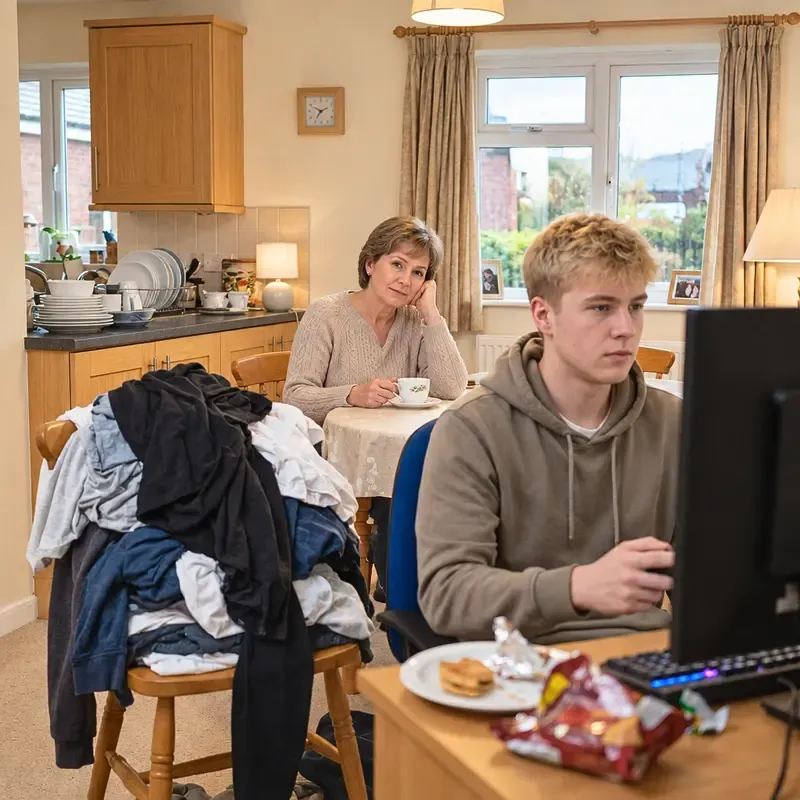
You are tired and running low on energy. It is completely normal to feel frustrated every time you clean up after them or cook another dinner you didn't plan on making. On top of that, you might feel guilty for feeling this way in the first place.
You might worry about what happens if they stay forever, or feel uneasy that setting firm rules could strain your relationship. Setting firm rules doesn't mean damaging your connection - in fact, clear boundaries are often the secret to building a better relationship with your adult children.
1. The Comfort Trap: Living in Walking-on-Eggshells Mode
It usually starts quietly. Your child might have moved back after university, come home after a breakup, or simply stayed on after school. At first, it felt natural to cook bigger meals, do their washing, or help out with their daily costs.
Over time, that short-term support turned into a comfortable habit - for them. For you, it turned into the comfort trap.
The Comfort Trap Dynamic:
When you handle their daily tasks: They do not learn how to manage everyday life for themselves.
When you take on all the household stress: They stay comfortable right where they are.
When you step in to fix every mistake: They lose the drive to build an independent life.
When you look after a grown adult as if they were still young, it gently tells them that you do not think they can manage on their own. At the same time, it takes away the freedom you waited so long to enjoy.
Living in this constant state of stress drains your energy. It is hard to look after your own health or be there for your ageing parents when your daily energy is constantly taken up by a grown child who is not pulling their weight.
Emotional Well-being and Mindset Programme

You can explore inspiring mindset shifts and holistic wellness tools over at Mindvalley to support your journey toward total self-acceptance.
This contains an affiliate link; I may earn a commission at no extra cost to you.
2. The Kitchen Table Family Meeting: Setting Boundaries Without Ambush
You cannot fix things with quick comments or by getting cross when a mess is left behind. You need a calm, quiet moment to reset how things work at home. Sitting down at the dining table helps you step away from nagging and talk together as adults.
Get on the Same Page with Your Partner
Before you speak to your adult child, you and your partner must present a united front. If one parent acts as the disciplinarian while the other secretly soft-lands every boundary, your child will quickly find the crack in the wall.
Having a full house when you expected a quiet home can put an unexpected strain on your marriage. Taking time to understand your overall empty nest relationship dynamics ensures you both stay on the same team instead of letting household stress come between you.

Changing What You Say
How you start this conversation makes all the difference. This is not about pushing them out of the house in a fit of temper.
What not to say: "We want our house back, and you are taking advantage of us."
What to say instead: "We are always here for you, but staying home forever isn't the goal for any of us. Let's work out a plan together so you can start moving forward with confidence."
When money and bills become a sore point:
What not to say: "You spend all your money on clothes and nights out while we pay for your food and electricity."
What to say instead: "We need to look at household costs together so everyone contributes fairly. Let's work out a realistic monthly budget so you can manage your money and prepare for living on your own.
When they react with guilt or complaints:
What they might say: "You don't care about me!"
What to say instead: "Of course I care about you, but keeping you dependent on us isn't doing you any favours. I want to see you build a life of your own."
What they might say: "It is too expensive to move out; you are being completely unfair!"
What to say instead: "Things are tough out there, which is why practising these skills now while you have our support is so important."
A Step-By-Step Plan Instead of Setting a Moving Out Deadline
If your adult child lacks drive or feels anxious, setting a single fixed date (like "you must move out in six months") can backfire. If six months pass and nothing has changed, you are left with an awful choice: force them out or give up on your rules.
Instead, set up a simple Step-by-Step Plan based on clear weekly actions:
Step 1: Looking After Themselves at Home (Weeks 1–2). They take full charge of making their own meals, doing their own washing, and managing their own daily routine.
Step 2: Paying Their Own Way (Weeks 3–4). They pay their own personal bills and make an agreed weekly or monthly contribution toward the house bills.
Step 3: Moving Forward Actions (Ongoing Weekly). They agree to take at least three clear steps every week toward living independently (like applying for jobs, looking at flat shares, or working out a budget).
Living at home depends on them actively taking these steps. If they choose not to participate, they choose to change how comfortable their stay here is. Without clear effort on their part, the usual home comforts will simply stop being provided.
3. After the Family Meeting: Putting the Rules into Practice
Once you finish the kitchen table meeting, the real change begins. You have given your adult child the roadmap, but now you need to put this into practice, starting from day one.
Kitchen & Meals
- They buy, plan, and cook their own food.
- No more waiting on them for dinner or cooking separate meals for them.
- They clean up their own cooking mess straight after eating.
Washing & Personal Space
- Their clothes, bedsheets, and personal room belong 100% to them to look after.
- Shared family spaces must stay tidy and clear of their things.
- If their washing sits unwashed, let them experience the natural inconvenience of running out of clean clothes.
Money & Bills
- They cover their own mobile phone, subscriptions, and social spending.
- Agree on a simple, set monthly contribution toward household utilities.
- If you wish, you can quietly save this money on the side to give back to them as a deposit when they move
Daily Admin
- Stop booking their dentist appointments, setting morning wake-up calls, or sorting out their daily paperwork.
- Step back completely and let them manage their own diary.
What to Do When They Let Things Fall Apart
When you stop running the house for them, your child might test your resolve by letting things drop. They might burn their food, leave dishes sitting in their room, or claim they "don't know how" to do simple tasks.
If you jump in to fix it, they quickly learn that doing a poor job brings back your help. Resist the temptation. Stay calm, step back, and let the small discomfort of a missed meal or an unwashed shirt teach the lesson for you.
Spotting and Celebrating Their Progress
When you step back and let them take charge, the transition won't always be smooth. It is easy to focus only on what they are still getting wrong, but noticing their small wins makes a massive difference.
Acknowledge the small steps: Whether they manage to cook a meal without help or sort out their own washing for the first time, take a moment to acknowledge it.
Build their confidence: Simple words of encouragement remind them that they are fully capable of handling real life on their own.
Keep the momentum going: When they see you notice their efforts, it builds their confidence and gives them the drive to keep moving forward.


4. Handling Real-World Challenges: Money, No Job, and Getting Around
It is easy to hesitate when real obstacles get in the way. When your child has no job, limited money, or cannot drive, your natural instinct is to jump in and fix things for them. Real support means stepping out of the way so they can build their own problem-solving confidence.
Low Funds & Housing Costs
A low bank balance can easily become an ongoing reason to stay comfortable at home. Help them look at a simple personal budget. If local housing is expensive, encourage them to look at flat shares or room rentals rather than waiting until they can afford a place of their own.
No Job or Lack of Drive
If your child is currently out of work, staying at home cannot feel like a long holiday. Make it a clear rule that looking for work or learning a new skill is their full-time job.
Set an expectation of a few clear job applications, training steps, or local volunteering hours every week. Having a routine builds momentum; empty days lead to feeling stuck, as outlined in this Psychology Today guide on empowering adult children.
Transport
If your child does not drive, playing taxi driver keeps you tied to their timetable. Let them experience public transport, walking, or cycling. The inconvenience of a long bus ride is often the exact nudge someone needs to save up for driving lessons or a car.
5. What If They Simply Refuse to Move Out?
This is the moment every parent dreads: you set a final date, and your adult child simply digs their heels in and refuses to look for anywhere else to live.
Before you start thinking about changing the locks - which creates huge distress for everyone - remember that you hold the keys to how comfortable your home is. You do not have to resort to a dramatic argument to make your point.
Taking Away the Easy Perks
Instead of an immediate standoff, you make staying in the house far less comfortable:
Change the Wi-Fi password immediately: Do not share the new password. If they need internet for job hunting, they can use the local library or their own mobile data.
Stop buying their food: Buy only what you and your partner need for the day. When the fridge stops stocking itself, staying at home loses its charm very quickly.
Remove your items from their room: If furniture, TVs, or appliances in their room belong to you, take them back into the main house.
Stop paying for their phone or TV subscriptions: Remove them from any shared family accounts.
When a home stops feeling like a free, warm hotel and starts feeling like a quiet, basic room with zero perks, the desire to stay wanes very quickly.
Bringing In Outside Help
When an adult child refuses to listen to their mother, it is often because they still view you as someone they can guilt, wear down, or ignore.
Bring in a neutral person: Ask a trusted family member, relative, or counsellor to sit in on a conversation.
Put it in writing: Give them a polite, written note stating the exact date when the living arrangement ends (for example, giving one month's notice).
Seek family mediation: If communication has completely broken down and you feel desperate for an exit plan, you can reach out for professional support through Relate UK family counseling services or check your local options with Citizens Advice guidance on family relationships.
In the UK, an adult family member paying low or no rent usually falls under an excluded occupier status, meaning you only need to give reasonable notice rather than go through standard tenancy courts - you can check the exact legal rights on the official GOV.UK guidance on ending an excluded tenancy. Putting it in writing creates absolute clarity without granting them any legal tenancy rights.
Changing the locks is only the final option if every rule and written boundary is completely ignored. In almost every case, when home stops being a free, easy retreat, your child will quickly find the drive to look for their own space.

Stay Connected and Supported
Don't forget to visit the resource page, where new free downloads and guides are regularly added to support your wellness journey.
If you haven’t already, join the mailing list to receive the latest midlife health tips and resources delivered straight to your inbox.
6. Protecting Your Own Peace of Mind and Mental Health
Setting rules in your house is only half the picture. The real work is looking after your own emotional well-being when your child shows little desire to move on. Let's be realistic: finding inner calm and peace at home is going to feel very difficult if your adult child digs their heels in and refuses to cooperate.
This will be a tumultuous and emotional time. Because the atmosphere at home may feel tense, taking deliberate time out for yourself - stepping out for a walk, spending an afternoon with a friend, or simply leaving the house for a quiet tea - isn't a luxury. It is essential for protecting your sanity while the storm passes.
When you stop doing everything for them, you will feel a strong urge to step back in - driven by old habits or a splash of guilt. Keeping your peace requires simple daily practices.
Calming Yourself When Tension Rises
Pause and Notice
Notice where you feel stress in your body (like a tight chest or clenched shoulders) when frustration or guilt pops up. Take a moment before responding.
Slow Diaphragmatic Breathing
Take a slow, deep breath in through your nose for 4 seconds, letting your belly expand. Exhale gently through your mouth for 6 seconds to calm your nervous system.
Simple Grounding
Place both feet firmly on the floor. Take a moment to remind yourself: "I am safe in my own home. Their discomfort is a normal part of growing up."
Letting Go of Parental Guilt
You are not a cold parent for wanting your home back. You are not unloving for expecting an adult to act like an adult.
Remind yourself every day: Doing everything for your grown child isn't helping them; it is keeping them dependent. Stepping back and allowing them to handle life's small challenges is one of the best gifts you can give them.
Creating Your Own Sanctuary
Protecting your peace means creating boundaries in your home too. If your home is on the smaller side, setting aside whole rooms as adult-only spaces might not be practical. Instead, create personal boundaries through quiet time blocks or by claiming a small, comfortable corner - like a specific armchair, a garden spot, or your own bedside area - that is kept tidy and off-limits for family discussions.
Reclaiming Your Midlife Freedom
This season of your life is not about putting your own plans on hold until someone else grows up. It is your time to enjoy yourself, focus on your health, spend quality time with your partner and friends, and make the most of the home you worked so hard for.
Reclaiming your space is about more than just house rules - it's your chance to focus back on your own growth. Explore personal development tools for midlife to help you step into this next chapter with confidence.
By putting clear ground rules in place, passing daily tasks back to your adult child, and taking care of your own well-being every day, you give your child the push they need to step into real adult life, while giving yourself back the peaceful, restful home you deserve.
Stay Updated - Sign Up for My Newsletter
Stay informed with expert advice for women over 50, right in your inbox. Join me!
Latest Articles:
Your Senior Journey - Supporting women over 50 through life's changes with confidence and healthy living.
© 2026 - yourseniorjourney.com - all rights reserved.